Friday, 29 June 2012

The Gambia: Post 2 - Orange and Mangoes


The day had finally arrived. We were set for a destination known only to us as “Tendaba Camp” and the only real information we had been given is that “it’s hot” along with the other helpful titbit “there are millions of Mosquitoes”. This left myself (and I am certain at least a couple of others) filled with excitement accompanied by a strong sense of trepidation. A convoy of Land Rovers grinding its way through the dusty roads of the Gambia is not an everyday sight for the locals yet they all seemed to know exactly what to expect. A few waving, others asking for empty bottles to help them get water or shouting the usual “Tubab!” , some simply observing us driving by and a small minority waving their arms and insisting we leave their village. This was mainly the teenage male contingent; who understandably bear a grudge towards outsiders however, do not yet understand the importance of tourism. Village upon village seemed to live in more squalor than the last, as we travelled along the ever more freshly lain tarmac roads on our 150km trip inland.


A sneaky tactical decision of feigning more illness than I was actually suffering from had paid off as I sat in the cabin on the open backed Land Rover; completely shielded from the scorching rays of the sun and the blinding orange clouds of dust erupting out from the underneath the tyres of the other Land Rovers in convoy. Half way through the journey the fortune ended and karma took its sweet revenge thanks to someone suffering more than I; thrusting me reluctantly into the blinding dust and live cremation the others were already enduring. A few kilometres, later misery was compounded further as the road that up unto now had been luxurious tarmac tore itself from beneath our tyres like a magician with a tablecloth. Suddenly we were in Africa and it was completely naked but with the same scenery, and it was amazing. Yes the dust was blinding, the skin was burning and journey seemed to be lasting forever but the purity of the environment was incredible. In the skies above life swarmed, birds of prey such as Hooded vultures, Palm-Nut Vultures and Snake Eagles soaring high in the thermals whilst in the lower reaches the Senegal Parrots and Abyssinian Rollers fluttered from canopy to canopy of the small clutches of trees.


Photo by Parys Hatchard

Evening was setting in and temperature dropping, nevertheless the dust remained persistent and continued to pound us in the face. The more observant among us would have noticed that the guides on the back of the Land Rovers had stuffed tissue in each of their nostrils. A point that it appeared the lecturers accompanying us had both neglected to mention to us and also forgotten to do anything about. At least we were in the same boat as it looked like we would all be sneezing clouds of dust for several weeks. The dust seemed to find its way into every nook and cranny and it made a great mousse like hair product. In actual fact this was not the only aesthetic effect of the dust. Upon finally reaching Tendaba camp the scene was more like a group of people that had been savagely attacked by fake tan than a group of students ready for roughing it up in the outdoors. Around 40 giant oompa loompas stepping off their Land Rovers, greeted by some friendly faced locals and interesting accommodation must have been a sight to behold. It was at this point that the unfortunate people got a chance to see just how big a mistake wearing white really was.


The bedrooms were basic to say the least, a thin mattress on a concrete slab with a mosquito net draped over it. Although basic there could be no complaints, there was a shower to remove the plastered orange shell we had developed and most importantly a new base. Before we knew it we were whisked off for dinner followed by the first of our Tendaba trips. A night crawl aboard a boat through the mangroves across the gigantic river that is the Gambia. It is safe to say that the scenery from Tendaba Camp was nothing short of epic. After sunset the Media conglomerate of around twenty students boarded the boat along with a couple of “guests” who had been staying at the resort, a guide and a couple of lecturers. Crossing the river in the pitch black armed with camera and head torch did not do too much to combat niggling fact that we were entering the unknown. Being the Media people everyone had their camera ready to capture anything and just minutes into trip a night heron appeared. Almost instantaneously the majority of the group began happy snapping much to my disgust. The poor Night Heron edged wearily back and forth along its perch during the 10 seconds it was subjected to blinding camera flashes of about 15 cameras. I put my camera away (the reason for the distinct lack of photos in the blog thus far). No matter how brief the experience for the bird, I did not want to be part of this.

Drifting further into the mangroves and crept past a bird in the mangroves, I instantly regretted packing the camera away as the guide, ecstasy audible in his voice, shouted “Pel’s Fishing Owl!” (a bird which apparently had not been spotted here in 5 years). A lucky few in the group managed a snap shot of the bird as it flew away. With a smug grin crossed with disbelief on his face the guide told the boat driver to move on. The second part of this trip involved a walk in search of wild hyenas. Thanks to the “guests” wanting to stay on the boat and ironically scaring away wildlife by singing “hakuna matata”; made even more ironic due to the fact that on our return to the boat the driver had bucket in hand and was bailing water out. Slightly lower in the water, we made our way back to camp. It was only when we arrived back at Tendaba that the significance of the Pel’s Fishing Owl sighting really sunk in. This was fantastic news for Tendaba.

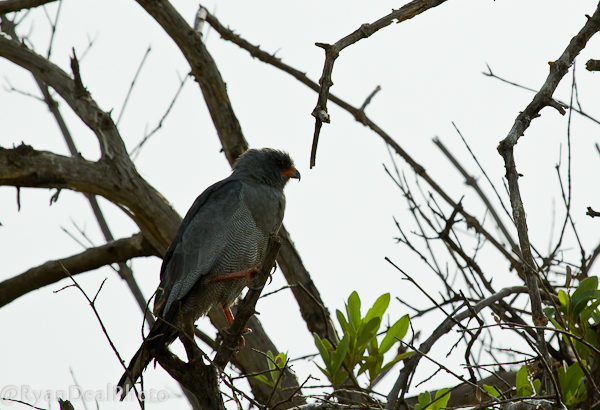
Before this night I thought the worst hangover occurred after a solid night out, apparently not. My Tendaba roommate (who will remain anonymous) in a fear of Mosquito bites unleashed a deluge of Deet spray mist on our room without airing it before bed. Safe to say the world’s worst headache led me to seek refuge in the fresh air around the communal dining tables for breakfast slightly earlier than planned at around 6am. This morning was our first chance to really take some pictures and enjoy the bird life in all its glory. Hopping aboard the Land Rovers we went off-roading on the local African plains. After he mixed emotions of the previous night we were greeted by a bountiful selection of Gambian bird life. Pied kingfishers were added to my list which had now reached four out of the eight resident Gambian species. Abyssinian Rollers, Yellow Billed Shrikes and Grey Kestrels all posed nicely for the group to take pictures in a mass photo shoot. Other species like the long crested eagle, African Green Pigeon and White Pelican remained too far away to get a decent shot of. The Abyssinian Roller itself was a beautiful bird to photograph; our Land Rover drove past the one below and had to reverse back into the gathering of other Land Rovers. I managed to get a snap shot before asking the guide “are they common?” to which he replied “yes, very”,

“So they are like our Feral Pigeon?” I asked, half expecting the guide to not know what they were.

“Yes” he replied

“Oh”

Nonetheless a beautiful bird. Come to think of it the Feral Pigeon isn't really a bad looking bird despite being compared to a flying rat by many.


We drove on seeing other birds such as several species of Sunbird, the Double Spurred Francolin and African Golden Oriole and also managed to get a quick shot of a Lizard Buzzard. The dust proved less problematic today but the sun beat down strongly and by lunch time people were exhausted and in much need of a lie down. We headed back through a little village seeing an Oxpecker perched in a shady baobab tree. Baobab trees were amongst several tree species so luscious and green leaved but the one that got to me most was the mango tree. There, in the middle of scorching Africa, a tree covered in mangoes. This wasn’t the only tree. There were lots of them dotted at random points throughout the journey. Temptation was told me to reach up and grab a fruit as we drove underneath a tree but morally it just didn’t feel quite right. Later I was offered a cashew fruit. Definitely realised I had chosen the wrong fruit as my tongue froze and face winced in protest. After this we had some time off so it seemed appropriate to sit by the bank of the Gambia and watch a Western Reef Heron.


As evening set an opportunity arose to go to the pool, rather than take a dip in the pool (which the day before had been a funny shade of green but was a clear crystal blue today) I decided to try my hand at getting a picture of the Barn Swallows that were swooping for insects in the glimmer of the fading evening sunlight next to the pool. It was a case of close but no Cicada.


Before bed we squeezed in another trip with a hike out of the village in search of Bush Babies. To avoid being involved in another case of blinding the poor blighters I decided not to take my camera. Bush Babies were surprisingly speedy little critters and no sooner had one set of eyes reflected back your torchlight than it had disappeared into the pitch black canopies. The wide eyes were enough to satisfy the soul. We had seen the quintessential nocturnal African mammal.

The following morning, after a better night’s sleep, we went on our final Tendaba trip back to the mangroves for some daylight exploration. The mangroves had already given us the the Pel’s Fishing Owl so expectations were high. We boarded the sinking boat and crossed the Gambia once more passing pelicans along the way. I managed to spot a Malachite kingfisher shortly before what seemed like endless waterways filled with Pied kingfishers. Following this the guide introduced us to the African darter; an intriguing bird that can fly as well as swim. As the day grew on the wildlife began to hide away, a Goliath heron flew off from a distance, as Martial eagle perched in the tree tops of a faraway tree and we got a brief glimpse of a White Backed Night Heron. Tendaba had been incredible. Only a handful of the birds spotted have been mentioned from a trip which really provided us with everything we could have wanted, rarities, beauties and ultimately; a true African experience.


150km later and we were nearly home in Bijilo. It just so happened that our land rover had a slight clutch issue. After passing an army check point and not stopping properly and rather angering several men with guns we were almost home when a traffic light at a crossroads turned red. The driver did not want to stop in case we broke down. He turned into the slip road to the right before cutting across 2 lanes of traffic and rejoining the road via the other slip road.

An incredible end to an incredible section of our journey however there was no time to rest; it was time to begin our chosen photography projects...


Tuesday, 5 June 2012

The Gambia: Post 1 - Ignorance Is No Longer Bliss


Africa. Dazzlingly exotic colours, gigantic sandy deserts and poverty stricken villages spring to the minds of the ignorant and wise alike. It is the way you perceive these factors that determines what you take from dipping your toe in this rich ocean of culture.

Admittedly when given the choice to go to The Gambia or Cornwall with the university the ignorance and slight neuroticism screamed out within “Surely it’s just like the zoo. Why go to Gambia? It costs a fair whack. It’s a huge flight. What if something happens? What if we crash? What about the dangerous animals!? I hate jabs!!!”. Thankfully common sense dictated; I had savings from work, it’s just a flight and it’s the chance of a lifetime. Having never been a fan of Africa, visiting the continent was not exactly at the forefront of possible future trips; therefore it just made sense to try it when the chance was right there to be taken.

Contrary to the neurotic notions, the plane journey was enjoyable and although all exits were duly noted, none of the heroic parachuting back to earth I envisioned in the nights leading up to take off were put into practice. Ignorance was partially shattered simply by stepping out of the plane at Banjul airport. The wall of hot air piling its great weight upon our previously air conditioned shoulders was unlike anything experienced before. It was a wonder that the birds around the airport had the energy to fly at all. Pied crows, Red eyed doves and hooded vultures resided near or circled around the airport. Each species was fascinating; common as muck, but every single species was a “lifer” and seemed as rare as the last.  Due to army check points at fairly regular intervals en route to the Baobab hotel filming and photography was limited. However, the number of new species was ever increasing and the wheels of the kid in the candy shop style fantasy had been set in motion. 


Photo By Lizzie Bedford

The Baobab itself was a fairly quaint hotel, a reasonable hideaway from the majority of the nippy little beggars I was forced to medicate for and a veritable wildlife crossroads. Green Vervet Monkeys, Agama lizards and copious butterfly and bird species stopped by frequently. The Green Vervet Monkeys in particular appeared to take delight in terrorising the majority of the other students over the 2 week trip, rousing them at unearthly hours by jumping on the tin roofs of the hotel.


The first few days were spent acclimatising to the heat and culture. As culture shocks go, this was a big one and it reverberated to the core. Half the streets between the airport and the hotel were unfinished building projects (a tax dodge so I am led to believe) and a mixture of constant attempts to part us foreigners (locally known as “Tubabs”) with money and people dropping like flies through illness all threatened to wreck the first few days. However, not even these things could take away from the wildlife spectacle that lay before us. A local called Mamadou was to be our guide and birder extraordinaire. His birding knowledge is surpassed by few and his Dr. Doolittle-esque bird calling ability worked a treat for calling many species closer. He could mimic species such as the Pearl spotted owlet in a way that a Lyrebird would struggle to match.


Over the first couple of days several trips were made to Bijilo Forest which was just a couple of hundred metres from the hotel. This is one of the few wildlife parks within this area of the Gambia and predictably it is diminishing slowly in size due to the value of land and construction in the country. Nonetheless it was a beautiful piece of forest crammed full of the dazzling exotic colours aforementioned. It laid home to common species such as the Red Billed Hornbill and Green Vervet monkeys, the slightly less common Little Bee Eaters (which will be in a later post about the Gambia) and the endangered Red Colobus Monkeys. Thankfully it was not rainy season so most of the dangerous snakes were up in the canopies or comfortably curled up under piles of leaves. This however did not stop a simple Sand Snake, that appeared hurl itself at the speed of light away from a path, rendering me pathetic for a solid 20 minutes.


For some reason a combination of illness and lack of a speedy acclimatisation seriously inhibited the happy snapper within, causing a limited amount of picture taking in the first few days. The key species targeted on the list of “must sees” were the eight species of Kingfishers. On the first day we saw the Blue Breasted Kingfisher but frustratingly in this instance “we” was about 40 or so people traipsing through the woodland of Bijilo forest. After politely bustling my way from near the back of a nonchalant queue I got a good look at the beauty perched among a heavily wooded section of forest. Unfortunately there is no blog worthy output from this encounter but it could be ticked off the list nonetheless. The second of the Kingfishers I spotted at the Abuko wildlife park a couple of days later. The Giant Kingfisher (which really lives up to its name) perched majestically on a branch next to a watering hole. This was accompanied by a sighting of a Malachite Kingfisher which gave a grand total of 3/8 Kingfishers after 3 days. Brilliant start! Abuko provided some new experiences on top of this: Monitor Lizards (both live and impaled on trees), a Nile Crocodile and Fruit Bats that looked far too large and cumbersome to dart with the supreme agility and grace they exhibited around the treetops.


The following day, I was excruciatingly close to acclimatising to the heats of the sea side resort close to Serrekunda and my ignorance once again proved my downfall. A trip inland to Tendaba camp had been organised and noted on the pre-organised work schedule that I had decided not to read. Temperatures at this new location were set to be around 5 or 6 degrees higher than the 35 degrees we were enjoying near Banjul.

Whilst contemplating this over the usual breakfast of hot dog sausages, scrambled egg and baked beans I looked across the road at the hooded vultures organised in a neat little row when a glimmer of blue caught my eye. Alas this was not the kingfisher that my record list was desperately calling for but something even rarer. It is not often that an Ipswich Town Football Club 2001/2003 home shirt is seen anywhere in England let alone the Gambia but there it was being modelled by a young child. This somewhat surreal experience of seeing a shirt similar to that you used to own, a few thousand kilometres from home, effectively changed the slightly subdued mood of the first couple of days in one foul swoop. Although the issues were not completely gone, they were going and soon we were leaving for Tendaba Camp in our unusual transport, accompanied by the smouldering sunlight that beats down in the heart of Africa... 


...The dusty road ahead awaits...


Monday, 2 April 2012

Spring, Flats and Time Lapse

Due to a month or so of non-stop university work I have had little time for the finer things in life such as: photography, going on a wild goose chase (quite literally) or even just exploring the places that intrigue me. During this time the seasons have changed, the weather has been unpredictable and much to my disgust; an hour of my Sunday was lost. Finally spring has sprung and seems to have more spring in its step than the lambs this year. Although, in all fairness they may just be trying to come to terms with this seasons new fashion.


The majority of University work was spent lumping camera equipment along the coast of Cumbria in search of a one legged sea gull. Yes it sounds ridiculous; it is ridiculous, however this is not just any gull. This is Stumpy the Mediterranean gull. Stumpy was eventually found near Workington harbour but finding her took a while as many black headed gulls tried to hinder my task by acting as imposters. Unfortunately for them, they had something Stumpy didn’t... the extra leg (and black wing tips to give more of an accurate technical identification difference).

The impostor! Black Headed gull
Stumpy has become quite the personality among birders in Cumbria and I have been chasing her down as part of a documentary making assignment. Anyway, there will be more on Stumpy once the documentary is finished...

Stumpy the Mediterranean gull

After doing a time lapse of the stars by Drumburgh and hearing the tidal waters flooding into the Solway estuary I got the idea of doing a tide lapse. Some tide lapse practice would be very useful if I am to make it good enough for the documentary. Fortunately I finally had a little time so decided to slow things down a little and see what else was about en route.

Early into the journey from Carlisle something brightly coloured next to a small pond caught the eye. Naturally I stopped to look, this time of year lots of migratory birds are getting lost and who knows what may end up on your doorstep. Unfortunately a second glance showed it was just a Moorhen.  This common bird was then scared off by the increasingly common dipstick, as it drove by honking its horn.

In pleasant contrast to this, the melody of the nesting Skylarks that swamped Burgh marsh acted as a refreshing reminder that spring had in fact arrived. Crouching behind a rock it was possible to get a couple of snap shots of one particular grounded skylark as it hopped between tufts of grass.


Several miles further towards the Solway, just after Port Carlisle, is a rocky section of beach that looked like the perfect landscape for a tide lapse shot. In hindsight researching  the tidal patterns of the Solway before embarking on this trip would have been a wise decision and with time (a commodity I am short of) they are something that can be learnt. However for the time being there was the issue of an empty estuary. The tide was due in 2 hours and there was still no sign of the flood into the estuary that had echoed a roar into the still night air just a few nights previous to this. Several minutes watching a Curlew and another encounter with a dipstick was enough force a decision.


With an urge to try out a new Manfrotto tripod and a brief attack of impatience the decision was made to ride on towards Campfield. There were a few gentlemen here enjoying the evening escape of bird watching under a golden sun. Amongst Wigeon, Pintails, Teal, Little Grebes and a Grey Heron they had apparently spotted a Garganey (too far away for my little binoculars). The Great White Egret that has made itself at home over the winter months was also strutting around the pool out the front of the hide. According to the regulars at Campfield the Great White Egret is often accompanied by a Little Egret to stave off the loneliness but unfortunately the Little Egret was nowhere to be found on this occasion.


After getting carried away with the duck related procrastination and temporarily forgetting about any intentions of doing a tide lapse, the sun dipped behind clouds on the horizon, a reminder that light was fading and the time for photography was diminishing. It was a race against time to get back to Drumburgh which after some thought seemed like the obvious place for a time lapse. The shore by Drumburgh is a beautiful place; the north facing point has a lot of potential for time lapses and more importantly it is away from the road (especially important on a day when the dipsticks are showing well).

My equipment nightmare that has ravaged me over the past couple of weeks struck again as my Hahnel Giga T pro time lapse remote broke. Since getting it I have used it twice successfully, used 3 batteries and now broken it. It’s safe to say any review on this product from me would not be flattering to say the least. This slight setback meant that the time lapse had to be done manually (using the timer on the camera so I didn’t case shake pressing the button). The set up was rushed and the sun too low in the sky for a decent lengthy time lapse however here is the result of the first test tide lapse.


Once again hindsight is a wonderful thing. A slower shutter speed could have blurred the water nicely and a lower shooting angle could have helped to improve the composition. During the production of the time lapse I found out my bike had 2 flat tyres and you can tell because at 4 seconds there is a slight jump. This was not best received... 9 miles from home and dusk rapidly setting in. There was no way I was walking home from Drumburgh for the second time in a month so I pumped the tyres to the best of my ability, desperately hoping for both punctures to be slow punctures, packed up and left.

One perk of travelling slower than usual is that there is more time to peruse the surroundings. The last day of March provided a treat with a mad march hare scarpering across the marsh. Despite being so common at home in Suffolk this was my first sighting of one in Cumbria. Nevertheless not even the rarity that is the mad march hare could entice me to get off the bike and take a picture; I was on a roll... sort of.

 A few miles down the road and travelling at an even slower pace, the bike was beginning to make strange noises. Not even these sickening noises could scare off the ghostly figure that swooped in the red sunlit dusk over a nearby field. A barn owl was out hunting. Ultimately it seemed a fitting way to end one of the more unusual Cumbrian outings of the past 8 months.

For anyone still bothered about my fate... I made it home 2 hours after leaving Drumburgh. From now on I may have to travel more places at 4.5mph. It’s a brilliant speed for wildlife!

Due to University trips to Gambia and Romania, assignments and a test later in May this could be my last post until June. I am very sorry about this but hopefully there will be lots of pictures from my travels so please come back another time!

Thank you very much and best wishes to all until next time.

Monday, 20 February 2012

Getting From 'C' to 'D'

Exploring all a city has to offer is one thing but few think outside the box; few think outside of the night clubs or the fast food restaurants. City life has become something that people no longer want to escape. Ease of access for shopping and places for social gatherings have meant people are comfortable within their familiar surroundings and have no need to leave. City living does have its charms; but for me, when it comes down to it, escape is a must.


Travelling south from Carlisle, upstream along the River Caldew, the feeling of escape can be achieved. The destination for today was a quaint little village around 5 miles upstream and the method of travel was a brisk hike. Unlike some river walks, the route from Carlisle to Dalston had the option of walking on either side of the river. After stopping off by a heronry in the tree tops I opted for the eastern side of the river. After the rainfall on the previous day this was boggy and the balancing act of my camera and I became a measured affair. Fortunately this side of the river is walked less often than the western bank, because my delicate waltz between trees in my hiking gear is a spectacle that should be seen by no one. Other than a buzzard and a few common garden birds this side of the river was very quiet (typical of a sunny day as I have found out the hard way many a time).

On approaching Dalston I was listening out for kingfishers as per usual at which point a dipper chirped up. The dipper did not stick around for long, choosing somewhere a little less crowded downstream. Immediately after crossing the river at Dalston it was clear that the western bank’s concrete cycle path was a more popular choice of route along the river. Packed with dog walkers and others who like to like to inadvertently make my life as difficult as possible this concrete cycle way did offer lots of friendly people prepared to leave their moments of solitude for the occasional greeting. Some of these pleasant people even had the time to discuss the wildlife and the weather. One such lady felt like a discussion about dippers and where they may “show well”. Of course her knowledge was accurate and I was able to enjoy watching dippers for a while whilst on the phone to family. Occasionally having to place to phone down just in case a dipper decided to brave coming closer (sorry Mother, I listened to most of what you were saying, honest).


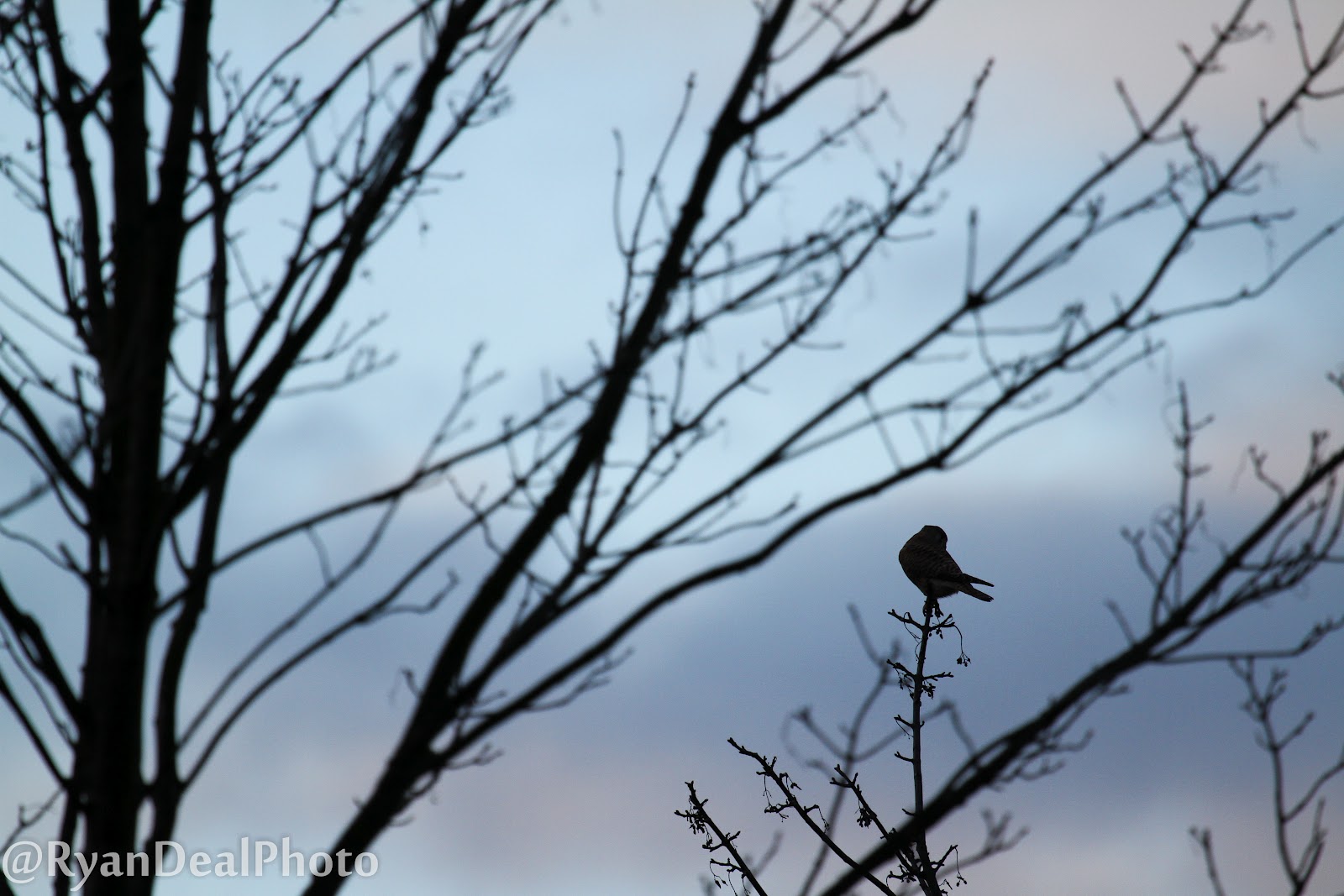
Disappointed by the lack of kingfisher sightings or even calls I trudged back into Carlisle. Spotting a Kestrel as dusk set in. First impressions of this river are fairly positive: great habitats for otters, dippers and potentially owls too. 


After using this time to explore a little I now have a decent idea of where to stop and wait to capture better photographs. Hiking is not the best way to get photographs but the freedom and greenery (limited as it was) was certainly needed. The fortune of such a beautiful day to explore made this an altogether enjoyable exploratory mission.

Thanks for reading

Wednesday, 8 February 2012

Norfolk Weekend: Day 2 "Snow way!? Beautiful Day"

False alarm! Yes, day 2 started with a rude awakening from the fire alarm at 3am.

Day 2 then restarted at 7.30am in a much more peaceful manner after a much needed good night’s rest. Thus far the 80 species we had compiled on our list of birds consisted of predominantly river and inland species, therefore this morning we decided to scour the coast.

After a brief look at the coastal marshland outside the hostel we had added a couple more common species to our list including Dunlin and Redshank before moving on towards Holkham Bay. However, en route to Holkham bay Ashley reminded us to keep an eye out for Barn Owls and literally as he said it Cain and I spotted a couple soaring across a snowy field to our right. We stopped the car to watch but they were too distant to get a good photograph. A small buzz of excitement tickled us as a Rough-Legged Buzzard joined the soaring Owls. We have the pleasure of observing them soaring over some grassland which contained some fairly friendly Lapwings and a few Grey Partridge. It was a surreal sight for all five minutes that it lasted before everything was disturbed and dispersed across other fields.

On arrival at Holkham Bay we were greeted by field of Pink Footed Geese and a broken ticket machine. You win some, you lose some... we lost 50 pence. This was not my first visit to Holkham Bay, however my intentions were very different from last time. The stunningly vast beach had been blanketed with a carpet of snow meaning that running around with a bucket and spade in just a t-shirt and swimming trunks was no longer an option. This trip was for the birds and it really paid off as we were treated to a feast of surprises. Enticing arrays of tantalising birds were found within a few hundred meters. It began with the simple species again with yet more Dunlin, Redshanks and a Red Breasted Merganser that was drifting in the waves. Cain spotted our main target of Holkham Bay; a pair of Shore Larks fluttering around the sparse shoots of vegetation in the vast sea of snow. They stuck around almost completely unhindered by our presence. Unfortunately we were not wearing the correct camouflage for the snowy conditions and our attempts to commando crawl towards them were unsuccessful. Thwarted because did not want to risk flushing them.


After watching these for a while we continued and came across a mixed flock that contained a large number of snow bunting. The action picked up for a while as a Hen Harrier flew overhead causing the flock to panic but this settled down as quickly as it began. 

As we went to leave there were a few more surprises waiting in the car park: A Dunnock frolicking by a fence and a Kestrel that swooped into a nearby tree. One Pink Footed Goose, surrounded by what seemed like a few Moorhens for bodyguards, seemed relaxed enough to allow us to photograph it too.


The final port of call for the weekend was RSPB Titchwell Marsh. Upon arrival we were greeted by some extremely friendly Robins and a Woodcock flying over the Car park. An Arctic Redpoll had been spotted around the reception area so Ashley made it his mission to find it and it didn’t disappoint him, eventually appearing amongst the alder trees. Whilst this was happening Cain and I decided to make the most of the photogenic Robin posing for some traditional Christmas card style pictures.


After this we made our way towards the hides. Half way there we spotted a Chinese Water Deer roaming the marshes. For a deer it was fairly tame and surprisingly did not bolt at first sight of us. Luckily I was prepared and managed to sneak a picture before it settled in the sheltered comfort of a shrub.


Steve and I then visited a hide and managed to identify a Ruff amongst the masses of sea birds trying to find the holes in the sheets of ice that had covered areas of the fresh water pool. Ashley and Cain managed to spot a juvenile Med Gull on this pool too. Finally we added the last few birds to our list including a Velvet Scoter and a Water Rail.

The total number of species after this chilly yet successful weekend was a reasonable 116. There were a few surprising species missing from the list including Bittern and Kingfisher however, this was a magical weekend of non-stop birding and stunning landscapes and wildlife.

Thanks for reading

Tuesday, 7 February 2012

Norfolk Weekend: Day 1 "That'll Be A Record Shot"

Delve deeper into the wildlife photography world and you will find two extremes of people. There are the people that do it to get the sharpest possible shots that aim to leave any viewer breathless; and then there are the people who use their photographs as “record shots” to help them catalogue the wildlife they have seen before. For their catalogue the collectors do not need the greatest quality pictures, just a picture to show they saw that particular species.

I stand amongst the group that sit on the fence: I strive to take the best possible shots but often circumstances such as low light, poor focus or distance from the subject deny me the perfect picture. Day 1 of the trip to north Norfolk was the day I learnt of the term "record shot" and turned out to be the day I had to utilise the phrase.

Embarking on the long journey from Cumbria at 1am Saturday morning (simply because we are penny pinching students that couldn’t afford the luxury of two nights in Norfolk) with Ashley, Cain and Steve rendered us fairly fatigued before we had even started. This however did not hinder what turned out to be an extremely successful weekend of bird and mammalian photography.

En route to Norfolk we decided to list all the species of bird spotted over the weekend. Occasional updates throughout the weekend were posted on twitter by Cain and me but for those who did not follow the weekend...

As misty morning light flooded through the pine needles in the forests of North Norfolk Day 1 began. Peacefully we waited on the verge of a road hoping to catch a sighting of a Golden Pheasant. Around half an hour and a couple of laps of a small circular route later, we finally found a Golden Pheasant feasting on salt on the freshly gritted road. This beautiful bird is on the brink of extirpation in the UK with around just 100 breeding pairs known to exist. This particular subject became the first to earn my newly discovered excuse of “it’s a record shot”.


After the fantastic start to this long day we started clocking up the bird species to add to the list; catching a lot of the common species on the drive to Buckenham Marshes. On arrival the list stood at 27 however this increased significantly as we spotted a pair of Peregrine Falcons, a large flock of Wigeon, Egyptian geese and a Cetti’s Warbler.


"Three's a crowd"

Whilst there Ashley made use of his scope to make a tricky long distance identification of a Lesser White Fronted Goose amongst a field of White Fronted Geese and other species. This came to the delight of the crowd of other birders with scopes who had gathered around Ashley whilst he surveyed the distant flock. This “record shot” shows the Lesser White Fronted Goose in the center of the picture. Its beak is shorter and white forehead steeper than that of the White Fronted Goose (bottom left of the picture).


By this stage it was getting colder and as temperatures plummeted we set back towards the car, spotting a female Bearded Tit along the way.


The next destination was Wroxham for sustenance. Just outside Wroxham we enquired to a couple that seemed to struggle to agree on anything about a possible place with a good view of Wroxham Broad. Luckily we chose the right advice and came across a large boating lake teeming with waterfowl. It was here Ashley spotted a Ring-Necked duck across the other side of the lake, unfortunately this time it was too far away to spot. Upon leaving Wroxham Broad we had made it to 63 species.

The last port of call for day 1 was Stubb’s Mill: Home to roosting Cranes. Kestrel, Marsh Harrier and Merlin were all added to the list at this stage as we awaited the elegant entrance of the Cranes. A couple landed in the distance and their distinctive calls echoed across the grassy golden fields. Light was fading as two cranes flew close overhead. All of a sudden I forgot the cold and just felt a respect for the cranes as they effortlessly glided in to roost.


Just as dusk was falling and a mixture of exhaustion and the freezing cold weather was getting the better of us we did catch a glimpse of a fox running across the viewing station. It was a nice way to cap off a brilliant first day that saw us find 80 different species of bird.


Day 1 turned out to be a great day for “record shots”. Day 2 was much better for photography... but that is for the next blog post. Coming very soon.

Thanks for Reading

Saturday, 14 January 2012

King Of The River

The iconic vibrant blue blur of a Kingfisher racing down a British river is a sight that captures the hearts of all generations. Often heard before seen, these birds are surprisingly stealthy for such brightly coloured individuals. Their iridescent glow in the sunlight creates an almost mythical presence that makes a sighting that little bit more special.

2011 appears to have been a good year for kingfishers on the Stour in Suffolk and on the Caldew in Cumbria as their numbers are abundant and spotting them seems to have become easier.


Kingfishers have regular perches, so once you have spotted one it is likely it will return to that perch in a matter of time. One particular kingfisher in Sudbury spends a lot of its time in one place, mainly due to the slow moving waters and small fry that shelter there from other predators. This creates the perfect dining experience for this particular kingfisher and it is magical to observe.

Occasionally an underwater predator appears, scattering the fry in all directions as they leap out of the water. This doesn’t usually go unnoticed by the kingfisher which is never too far behind. However, try as it might to stick to its successful fishing spot, this particular kingfisher is constantly picked on by a couple of avian thugs. On several occasions black headed gulls have swooped towards this perch, scaring the kingfisher into the nearest tree amidst a chorus of interaction between the two birds. The kingfisher clearly voices its distaste at the gull disrupting his meal time. Unfortunately the thuggish gull suffered from extreme bouts of vanity and sat on the perch looking down at its reflection for around 30 minutes. The kingfisher remained in the tree all the time and although it doesn’t have the capacity for obvious facial expressions, it looked pretty fed up.


Kingfishers are fiercely territorial and have been known to fight to the death, but these territories are extremely important for breeding.  When February comes the pairing of kingfishers will begin; nests will be built in sandy riverbanks for what could be the first of several broods this year. Towards the end of December the kingfishers along the river Caldew in Cumbria had got well into the swing of fighting for territory (which begins as early as September). The river bank is no safe place to be when two female kingfishers come hurtling towards you, each missing by a meter either side of you. Stricken with fear that there would be a kingfisher shaped hole somewhere on your body, it is not easy to try and take a photograph (yes that actually happened). Still, that experience is far more exhilarating than any old rollercoaster or action movie; it can’t be recreated. Breathtaking.


The video below is the first ever video of the chap from the River Stour. It is possible to tell this is a male kingfisher because his beak is entirely black. In contrast to this the lower mandible of the female kingfisher is red-orange in colour.


On a personal note I have grown up living near rivers and going on a few canal boat holidays. This bird is a very special bird to me as I have been watching them and looking out for them since I was very young. Seeing their current success is absolutely brilliant and long may it continue. It has been a pleasure being in the vicinity of the kingfisher in Sudbury; getting to know his personality and watching him hunting, totally unperturbed by my presence. Of course I would never try and get too close (not even to get “that shot”, it’s just not worth it) but I am honoured he lets me as close as he does. For me, nothing beats just sitting and watching him.

As this is my first post of 2012... Happy new year everyone!
Thank you for reading.