Showing posts with label Africa. Show all posts

Wednesday, 18 July 2012

The Gambia: Post 3 – The Final Project

Refreshed from the plummet in temperature upon our return to the coast it was time to begin planning our final projects.  At a chilly 27 degrees Celsius care had to be taken and additional layers were worn over breakfast in attempt to focus as much thinking as possible towards a possible project. Whilst some of the more organised students had already planned out and had a project set in stone; others, including myself, were still floundering over the infinite possibilities that The Gambia had to offer. The proverbial thinking cap suited well and ideas mulled over continually all throughout breakfast. It was only after a hot dog sausage and half a plate of beans that my mind finally settled upon a little character that I likened to my beloved kingfishers from home. Little blasts of colour, iridescent in the rich African sunlight and with similar characteristics to the kingfisher; the Little Bee Eater seemed like an obvious choice of subject.


During the few days prior to the Tendaba trip I had stumbled across the Little Bee Eaters after wandering away from the main group. The majority of people strolled in the relative shade of Bijilo forest on this particular day. On the verge of burning to a cinder and low on water I took the decision to leave the forest and walk along the adjacent beach where there was more of that photographer’s best friend, Light! A poorly modelled idea at the best of times; nevertheless lingering amongst the shrubs in the scrubland between Bijilo forest and the beach was a pair of Little Bee Eaters. Perched precariously side by side on a long blade of grass emerging from a crumbling sand bank they had a certain character about them. Being a sucker for brightly coloured things they really struck a chord; a chord which thankfully reverberated into my memory during this train of thought. 


After “extensive” research (in reality about half an hour’s worth) I had gathered enough information to ensure this was a feasible project. The Little Bee Eaters frequented the same perches and sand banks day after day so locating them would be no problem at all. Just the small task of relocating the ones I had encountered in my bedraggled state before the Tendaba trip.


Another upside to the Little Bee Eater project was the fact it was not far to traipse in the event of another temperature increase. Easy access to the project meant that I was able to return on more than one occasion. The first day of traipsing I was accompanied by Paul Mitchell and a couple of others who were also looking project inspiration. Litter is a real problem in the more developed areas of The Gambia and the short sandy path to the beach was no exception. Yet, where the litter laid recklessly strewn over the dusty path, a high diversity of bird life seemed to have accumulated. Fire finches, Hooded Vultures and Cattle Egrets all sifted through the mess in hope of an easy meal. 


Trudging further into the forest an animal conservation student, Hannah (@Colour_TheWorld on twitter) spotted civet tracks. Civets are animals not known to live in Bijilo forest so excitement escalated rapidly amongst the small group. After some enquiring about camera traps, Paul Mitchell had his project. Evidence to back up the existence of Civets within the forest would be excellent news for the forest and surrounding area... This project was continued on Paul’s blog


Getting back to matters in hand! The Little Bee Eaters made an appearance about half way down the forest, in line with a little hut on the beach which really aided in relocating them. However before work could truly begin there was the small matter of a visit to a fish market. The usual bustling sounds and colourful sights of the Gambia were on this occasion accompanied by the stench of fish. Tottering through the market at an amble, disregarding the odd waft of foul smelling fish rot, the overall stench was a pleasant one. Smoke houses contained row upon row of delicious smelling species of fish, the likes of which go beyond my wildlife knowledge. Swordfish, Wrays and Sharks were amongst the fish being processed by the ladies and gentlemen working at this particular fish market brandishing their chopping and gutting tools. A swift tour by one of the youngsters really gave an insight into the inner workings of a Gambian fish market. Despite a pleasant atmosphere however, there is always a fear that their methods of fishing, despite best efforts to control them, are non-sustainable. This fear was compounded the next day on a trip to Bijol Island where a couple of fishing vessels were spotted fishing in a prohibited fishing zone.


Just a short boat ride away from the mainland, Bijol Island is a low lying sand bank situated in the shallows a mile or two offshore. Camera equipment was fortunately stashed safely away as we ploughed through waves as they pummelled our starboard side. Every wave erupted into a spray of mist ensuring that by the time we grounded on Bijol Island we were well and truly drenched. 


Bijol Island contained two delicately balanced colonies of tern: The first species being the world’s largest tern; The Caspian Tern and the second being the elegant Royal Tern.  Their colonies lay side by side, clearly inhibited in colony size by the level of the tide. Tightly packed together, each colony even fought amongst themselves for space and each tern to maintain its genetic line. This was evident as in many cases terns were forced to chase other terns away from attacking their young. It was clear that life on Bijol Island is no fairytale; nevertheless it was an awesome spectacle. The sight of hundreds of terns gliding into flight as a breeze gently blew beneath their wings. Floating like puppets on strings they hovered creating a wave of terns; a menacing wall to contend with for any potential predator. At times we were considered predators and on multiple occasions the terns swooped at great velocity towards our group. It is usually the tallest person that gets attacked so half the group took to crouching while they walked, resembling something more like a performance of CATS on Broadway than a collection of students. Despite close shaves no one got hit, although the gust of wind from a wing beat ruffled a few hairs at times. 


The final few days were spent perched along with the Little Bee Eater on the sand banks. It was a delight to sit and watch the Little Bee Eaters as they undertook their day to day business. Although wary of my presence at first, they warmed to it and allowed me fairly close to each of their regular perches. Attempts at remotely controlled camera shots of them inevitably failed as by sods law they stopped using the regular post I had set my equipment near for the day. It was down to handheld shots obtained by crouching in the sharp undergrowth that left me with me with legs resembling a kittens scratching post. The range of behaviour exhibited by the Little Bee eaters was incredible. The male regularly fed the female and a third member of the family chipped in with the work load every so often. 


As well as perching the Little Bee Eaters exhibited: displaying, gathering food by doing small circuits from their perch, the need to scratch an itch and most interestingly; regurgitation. This was not the only interesting behaviour spotted during the time on the bank. Hooded Vultures and Black Kites proved entertaining with their constant interactions, more bird species fraternising amongst rubbish but this time on the beach.


The Little Bee Eaters really helped complete the trip to Gambia. Exploring their world first hand gave a real insight to the species as a whole and it is clear to see why this particularly stunning little species is so successful. Protecting the sand banks that conceal their nest holes along the front of Bijilo forest is key to their survival. Although the species is currently successful, the ever increasing tourism generated in the Gambia will bring more people to the beaches, potentially interrupting mating. However, this is just a theory and something that could potentially be dealt with easily in the event of any disturbance.


It was a distinct pleasure to visit The Gambia. After scratching the money grabbing surface the underneath contains such welcoming people, beautiful creatures and cultural and environmental experiences that titillate every sense. All in all the Gambia is an amazing country and I highly recommend a visit if you are after an enormous diversity of wildlife or simply being immersed in genuine African Culture. Besides, the things listed in the blog are only a drop in the ocean of possible experiences... there are plenty more where these came from.


Friday, 29 June 2012

The Gambia: Post 2 - Orange and Mangoes


The day had finally arrived. We were set for a destination known only to us as “Tendaba Camp” and the only real information we had been given is that “it’s hot” along with the other helpful titbit “there are millions of Mosquitoes”. This left myself (and I am certain at least a couple of others) filled with excitement accompanied by a strong sense of trepidation. A convoy of Land Rovers grinding its way through the dusty roads of the Gambia is not an everyday sight for the locals yet they all seemed to know exactly what to expect. A few waving, others asking for empty bottles to help them get water or shouting the usual “Tubab!” , some simply observing us driving by and a small minority waving their arms and insisting we leave their village. This was mainly the teenage male contingent; who understandably bear a grudge towards outsiders however, do not yet understand the importance of tourism. Village upon village seemed to live in more squalor than the last, as we travelled along the ever more freshly lain tarmac roads on our 150km trip inland.


A sneaky tactical decision of feigning more illness than I was actually suffering from had paid off as I sat in the cabin on the open backed Land Rover; completely shielded from the scorching rays of the sun and the blinding orange clouds of dust erupting out from the underneath the tyres of the other Land Rovers in convoy. Half way through the journey the fortune ended and karma took its sweet revenge thanks to someone suffering more than I; thrusting me reluctantly into the blinding dust and live cremation the others were already enduring. A few kilometres, later misery was compounded further as the road that up unto now had been luxurious tarmac tore itself from beneath our tyres like a magician with a tablecloth. Suddenly we were in Africa and it was completely naked but with the same scenery, and it was amazing. Yes the dust was blinding, the skin was burning and journey seemed to be lasting forever but the purity of the environment was incredible. In the skies above life swarmed, birds of prey such as Hooded vultures, Palm-Nut Vultures and Snake Eagles soaring high in the thermals whilst in the lower reaches the Senegal Parrots and Abyssinian Rollers fluttered from canopy to canopy of the small clutches of trees.


Photo by Parys Hatchard

Evening was setting in and temperature dropping, nevertheless the dust remained persistent and continued to pound us in the face. The more observant among us would have noticed that the guides on the back of the Land Rovers had stuffed tissue in each of their nostrils. A point that it appeared the lecturers accompanying us had both neglected to mention to us and also forgotten to do anything about. At least we were in the same boat as it looked like we would all be sneezing clouds of dust for several weeks. The dust seemed to find its way into every nook and cranny and it made a great mousse like hair product. In actual fact this was not the only aesthetic effect of the dust. Upon finally reaching Tendaba camp the scene was more like a group of people that had been savagely attacked by fake tan than a group of students ready for roughing it up in the outdoors. Around 40 giant oompa loompas stepping off their Land Rovers, greeted by some friendly faced locals and interesting accommodation must have been a sight to behold. It was at this point that the unfortunate people got a chance to see just how big a mistake wearing white really was.


The bedrooms were basic to say the least, a thin mattress on a concrete slab with a mosquito net draped over it. Although basic there could be no complaints, there was a shower to remove the plastered orange shell we had developed and most importantly a new base. Before we knew it we were whisked off for dinner followed by the first of our Tendaba trips. A night crawl aboard a boat through the mangroves across the gigantic river that is the Gambia. It is safe to say that the scenery from Tendaba Camp was nothing short of epic. After sunset the Media conglomerate of around twenty students boarded the boat along with a couple of “guests” who had been staying at the resort, a guide and a couple of lecturers. Crossing the river in the pitch black armed with camera and head torch did not do too much to combat niggling fact that we were entering the unknown. Being the Media people everyone had their camera ready to capture anything and just minutes into trip a night heron appeared. Almost instantaneously the majority of the group began happy snapping much to my disgust. The poor Night Heron edged wearily back and forth along its perch during the 10 seconds it was subjected to blinding camera flashes of about 15 cameras. I put my camera away (the reason for the distinct lack of photos in the blog thus far). No matter how brief the experience for the bird, I did not want to be part of this.

Drifting further into the mangroves and crept past a bird in the mangroves, I instantly regretted packing the camera away as the guide, ecstasy audible in his voice, shouted “Pel’s Fishing Owl!” (a bird which apparently had not been spotted here in 5 years). A lucky few in the group managed a snap shot of the bird as it flew away. With a smug grin crossed with disbelief on his face the guide told the boat driver to move on. The second part of this trip involved a walk in search of wild hyenas. Thanks to the “guests” wanting to stay on the boat and ironically scaring away wildlife by singing “hakuna matata”; made even more ironic due to the fact that on our return to the boat the driver had bucket in hand and was bailing water out. Slightly lower in the water, we made our way back to camp. It was only when we arrived back at Tendaba that the significance of the Pel’s Fishing Owl sighting really sunk in. This was fantastic news for Tendaba.

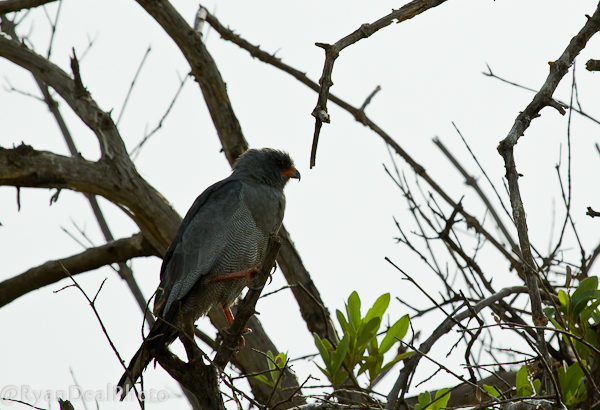
Before this night I thought the worst hangover occurred after a solid night out, apparently not. My Tendaba roommate (who will remain anonymous) in a fear of Mosquito bites unleashed a deluge of Deet spray mist on our room without airing it before bed. Safe to say the world’s worst headache led me to seek refuge in the fresh air around the communal dining tables for breakfast slightly earlier than planned at around 6am. This morning was our first chance to really take some pictures and enjoy the bird life in all its glory. Hopping aboard the Land Rovers we went off-roading on the local African plains. After he mixed emotions of the previous night we were greeted by a bountiful selection of Gambian bird life. Pied kingfishers were added to my list which had now reached four out of the eight resident Gambian species. Abyssinian Rollers, Yellow Billed Shrikes and Grey Kestrels all posed nicely for the group to take pictures in a mass photo shoot. Other species like the long crested eagle, African Green Pigeon and White Pelican remained too far away to get a decent shot of. The Abyssinian Roller itself was a beautiful bird to photograph; our Land Rover drove past the one below and had to reverse back into the gathering of other Land Rovers. I managed to get a snap shot before asking the guide “are they common?” to which he replied “yes, very”,

“So they are like our Feral Pigeon?” I asked, half expecting the guide to not know what they were.

“Yes” he replied

“Oh”

Nonetheless a beautiful bird. Come to think of it the Feral Pigeon isn't really a bad looking bird despite being compared to a flying rat by many.


We drove on seeing other birds such as several species of Sunbird, the Double Spurred Francolin and African Golden Oriole and also managed to get a quick shot of a Lizard Buzzard. The dust proved less problematic today but the sun beat down strongly and by lunch time people were exhausted and in much need of a lie down. We headed back through a little village seeing an Oxpecker perched in a shady baobab tree. Baobab trees were amongst several tree species so luscious and green leaved but the one that got to me most was the mango tree. There, in the middle of scorching Africa, a tree covered in mangoes. This wasn’t the only tree. There were lots of them dotted at random points throughout the journey. Temptation was told me to reach up and grab a fruit as we drove underneath a tree but morally it just didn’t feel quite right. Later I was offered a cashew fruit. Definitely realised I had chosen the wrong fruit as my tongue froze and face winced in protest. After this we had some time off so it seemed appropriate to sit by the bank of the Gambia and watch a Western Reef Heron.


As evening set an opportunity arose to go to the pool, rather than take a dip in the pool (which the day before had been a funny shade of green but was a clear crystal blue today) I decided to try my hand at getting a picture of the Barn Swallows that were swooping for insects in the glimmer of the fading evening sunlight next to the pool. It was a case of close but no Cicada.


Before bed we squeezed in another trip with a hike out of the village in search of Bush Babies. To avoid being involved in another case of blinding the poor blighters I decided not to take my camera. Bush Babies were surprisingly speedy little critters and no sooner had one set of eyes reflected back your torchlight than it had disappeared into the pitch black canopies. The wide eyes were enough to satisfy the soul. We had seen the quintessential nocturnal African mammal.

The following morning, after a better night’s sleep, we went on our final Tendaba trip back to the mangroves for some daylight exploration. The mangroves had already given us the the Pel’s Fishing Owl so expectations were high. We boarded the sinking boat and crossed the Gambia once more passing pelicans along the way. I managed to spot a Malachite kingfisher shortly before what seemed like endless waterways filled with Pied kingfishers. Following this the guide introduced us to the African darter; an intriguing bird that can fly as well as swim. As the day grew on the wildlife began to hide away, a Goliath heron flew off from a distance, as Martial eagle perched in the tree tops of a faraway tree and we got a brief glimpse of a White Backed Night Heron. Tendaba had been incredible. Only a handful of the birds spotted have been mentioned from a trip which really provided us with everything we could have wanted, rarities, beauties and ultimately; a true African experience.


150km later and we were nearly home in Bijilo. It just so happened that our land rover had a slight clutch issue. After passing an army check point and not stopping properly and rather angering several men with guns we were almost home when a traffic light at a crossroads turned red. The driver did not want to stop in case we broke down. He turned into the slip road to the right before cutting across 2 lanes of traffic and rejoining the road via the other slip road.

An incredible end to an incredible section of our journey however there was no time to rest; it was time to begin our chosen photography projects...


Tuesday, 5 June 2012

The Gambia: Post 1 - Ignorance Is No Longer Bliss


Africa. Dazzlingly exotic colours, gigantic sandy deserts and poverty stricken villages spring to the minds of the ignorant and wise alike. It is the way you perceive these factors that determines what you take from dipping your toe in this rich ocean of culture.

Admittedly when given the choice to go to The Gambia or Cornwall with the university the ignorance and slight neuroticism screamed out within “Surely it’s just like the zoo. Why go to Gambia? It costs a fair whack. It’s a huge flight. What if something happens? What if we crash? What about the dangerous animals!? I hate jabs!!!”. Thankfully common sense dictated; I had savings from work, it’s just a flight and it’s the chance of a lifetime. Having never been a fan of Africa, visiting the continent was not exactly at the forefront of possible future trips; therefore it just made sense to try it when the chance was right there to be taken.

Contrary to the neurotic notions, the plane journey was enjoyable and although all exits were duly noted, none of the heroic parachuting back to earth I envisioned in the nights leading up to take off were put into practice. Ignorance was partially shattered simply by stepping out of the plane at Banjul airport. The wall of hot air piling its great weight upon our previously air conditioned shoulders was unlike anything experienced before. It was a wonder that the birds around the airport had the energy to fly at all. Pied crows, Red eyed doves and hooded vultures resided near or circled around the airport. Each species was fascinating; common as muck, but every single species was a “lifer” and seemed as rare as the last.  Due to army check points at fairly regular intervals en route to the Baobab hotel filming and photography was limited. However, the number of new species was ever increasing and the wheels of the kid in the candy shop style fantasy had been set in motion. 


Photo By Lizzie Bedford

The Baobab itself was a fairly quaint hotel, a reasonable hideaway from the majority of the nippy little beggars I was forced to medicate for and a veritable wildlife crossroads. Green Vervet Monkeys, Agama lizards and copious butterfly and bird species stopped by frequently. The Green Vervet Monkeys in particular appeared to take delight in terrorising the majority of the other students over the 2 week trip, rousing them at unearthly hours by jumping on the tin roofs of the hotel.


The first few days were spent acclimatising to the heat and culture. As culture shocks go, this was a big one and it reverberated to the core. Half the streets between the airport and the hotel were unfinished building projects (a tax dodge so I am led to believe) and a mixture of constant attempts to part us foreigners (locally known as “Tubabs”) with money and people dropping like flies through illness all threatened to wreck the first few days. However, not even these things could take away from the wildlife spectacle that lay before us. A local called Mamadou was to be our guide and birder extraordinaire. His birding knowledge is surpassed by few and his Dr. Doolittle-esque bird calling ability worked a treat for calling many species closer. He could mimic species such as the Pearl spotted owlet in a way that a Lyrebird would struggle to match.


Over the first couple of days several trips were made to Bijilo Forest which was just a couple of hundred metres from the hotel. This is one of the few wildlife parks within this area of the Gambia and predictably it is diminishing slowly in size due to the value of land and construction in the country. Nonetheless it was a beautiful piece of forest crammed full of the dazzling exotic colours aforementioned. It laid home to common species such as the Red Billed Hornbill and Green Vervet monkeys, the slightly less common Little Bee Eaters (which will be in a later post about the Gambia) and the endangered Red Colobus Monkeys. Thankfully it was not rainy season so most of the dangerous snakes were up in the canopies or comfortably curled up under piles of leaves. This however did not stop a simple Sand Snake, that appeared hurl itself at the speed of light away from a path, rendering me pathetic for a solid 20 minutes.


For some reason a combination of illness and lack of a speedy acclimatisation seriously inhibited the happy snapper within, causing a limited amount of picture taking in the first few days. The key species targeted on the list of “must sees” were the eight species of Kingfishers. On the first day we saw the Blue Breasted Kingfisher but frustratingly in this instance “we” was about 40 or so people traipsing through the woodland of Bijilo forest. After politely bustling my way from near the back of a nonchalant queue I got a good look at the beauty perched among a heavily wooded section of forest. Unfortunately there is no blog worthy output from this encounter but it could be ticked off the list nonetheless. The second of the Kingfishers I spotted at the Abuko wildlife park a couple of days later. The Giant Kingfisher (which really lives up to its name) perched majestically on a branch next to a watering hole. This was accompanied by a sighting of a Malachite Kingfisher which gave a grand total of 3/8 Kingfishers after 3 days. Brilliant start! Abuko provided some new experiences on top of this: Monitor Lizards (both live and impaled on trees), a Nile Crocodile and Fruit Bats that looked far too large and cumbersome to dart with the supreme agility and grace they exhibited around the treetops.


The following day, I was excruciatingly close to acclimatising to the heats of the sea side resort close to Serrekunda and my ignorance once again proved my downfall. A trip inland to Tendaba camp had been organised and noted on the pre-organised work schedule that I had decided not to read. Temperatures at this new location were set to be around 5 or 6 degrees higher than the 35 degrees we were enjoying near Banjul.

Whilst contemplating this over the usual breakfast of hot dog sausages, scrambled egg and baked beans I looked across the road at the hooded vultures organised in a neat little row when a glimmer of blue caught my eye. Alas this was not the kingfisher that my record list was desperately calling for but something even rarer. It is not often that an Ipswich Town Football Club 2001/2003 home shirt is seen anywhere in England let alone the Gambia but there it was being modelled by a young child. This somewhat surreal experience of seeing a shirt similar to that you used to own, a few thousand kilometres from home, effectively changed the slightly subdued mood of the first couple of days in one foul swoop. Although the issues were not completely gone, they were going and soon we were leaving for Tendaba Camp in our unusual transport, accompanied by the smouldering sunlight that beats down in the heart of Africa... 


...The dusty road ahead awaits...